The Rottweiler is a powerful, muscular, and intelligent dog breed with clearly defined physical requirements. Anyone considering what the best food for Rottweilers is should not only look at brand promises, but also at physiological needs.
Nutrition has a major impact on this breed's:
Muscle mass
Joint strain
Weight development
Digestion
Heart health
Life expectancy
Thoughtful, breed-specific feeding is therefore a key health factor.
Table of Contents
Feeding Rottweilers correctly: Why this breed has special requirements
Rottweilers are among the medium to large dog breeds. Males reach a withers height of up to 68 cm and often weigh around 50 kg. This body mass means considerable mechanical strain on the joints, ligaments, and spine.
At the same time, Rottweilers are active dogs with pronounced musculature. They need sufficient energy—but in a controlled way to avoid obesity. This is exactly where the challenge lies: The best food for Rottweilers must provide performance on the one hand while acting preventively against weight gain on the other.
A blanket feeding approach based on standard recommendations rarely does this breed justice.

Protein requirements and muscle structure
The Rottweiler's musculature is not just an aesthetic feature, but a functional necessity. High-quality animal protein is essential for maintenance, development, and regeneration. What matters is not just the pure amount of protein, but above all:
the amino acid profile
the biological value
the digestibility
Proteins from clearly declared muscle meat provide essential amino acids such as leucine, isoleucine, and valine, which are necessary for muscle metabolism and tissue development. In contrast, low-quality or highly processed protein sources can strain digestion and do not provide the same physiological benefits.
Suitable Rottweiler food should therefore contain high-quality, transparent protein sources and avoid unnecessary fillers.
Joint health: A key topic for Rottweilers
Due to their body weight, Rottweilers are prone to:
hip dysplasia
elbow dysplasia
osteoarthritis
degenerative joint changes
These conditions are often genetically predisposed, but are significantly exacerbated by obesity. Nutrition therefore plays a dual role: it influences both body weight and inflammatory processes.
Omega-3 fatty acids from high-quality fat sources have anti-inflammatory properties. Supplementary substances such as glucosamine and chondroitin can support joint function. A moderate energy content is also important to maintain the ideal weight.
Every additional kilogram of body weight significantly increases the strain on the joints.
Good food for Rottweilers takes these factors into account preventively.

Digestion and stomach sensitivity
Many Rottweilers have a sensitive digestion. Bloating, loose stools, or intolerances occur more frequently with highly processed or low-quality food.
Good Rottweiler nutrition is characterized by:
easily digestible carbohydrates
high-quality meat components
moderate fat content
gentle preparation
A stable gastrointestinal tract not only influences well-being but also nutrient absorption. If food is poorly utilized, deficiencies arise despite sufficient quantities.
Furthermore, gut health is directly related to the immune system, as a large part of the immune cells are located in the gut.
Energy requirements and weight control
Rottweilers tend to gain weight—especially with too little exercise or uncontrolled feeding. Obesity increases the risk of:
joint problems
heart strain
metabolic diseases
reduced life expectancy
The best food for Rottweilers should therefore not only be nutrient-rich but also energy-appropriate. An individually tailored portion size is crucial, as requirements depend heavily on the activity level.
A working dog kept in athletic condition needs significantly more energy than a less active family dog.

Which feeding methods are suitable?
Many owners waver between dry food, wet food, BARF, or freshly cooked food. Every option has pros and cons.
Dry food is highly processed and often contains fillers or unclear protein sources. The low moisture content can additionally strain the digestion of sensitive dogs.
Wet food contains more moisture, but sometimes has high energy densities or additives.
BARF can work, but requires exact nutrient calculation. Incorrect formulations quickly lead to deficiencies.
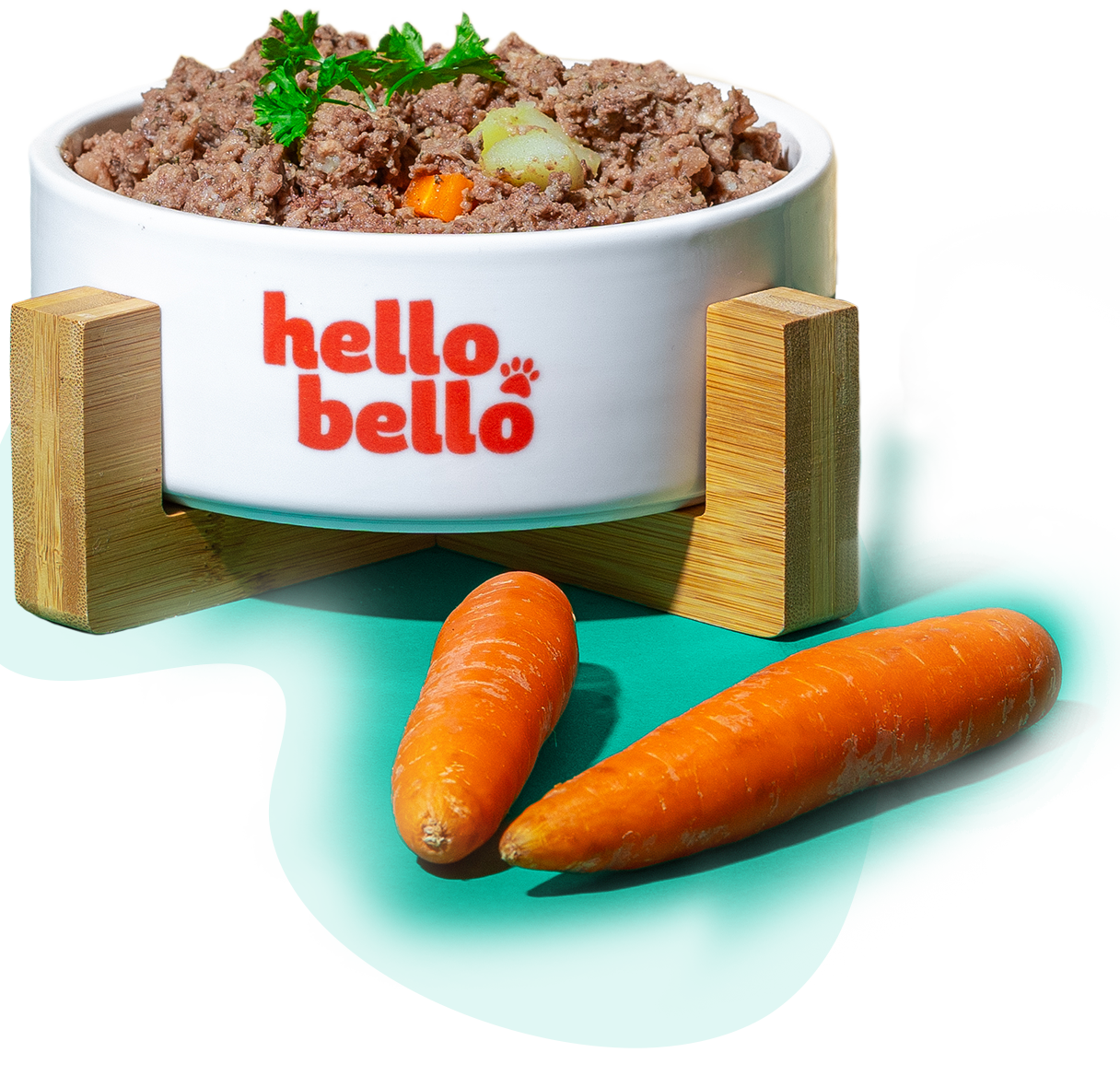
Freshly cooked dog food like HelloBello offers the advantage of high digestibility while maintaining a transparent ingredient composition. Thanks to the gentle preparation, nutrients are better preserved than in highly extruded products.

Individualization as the key
No Rottweiler is like another. Differences arise from:
Age (puppy, adult, senior)
Activity level
Neutering status
Health condition
Metabolism
Especially with large dog breeds, an individual adjustment of the food quantity is essential. A blanket gram amount rarely does justice to reality.
The best food for Rottweilers takes these variables into account and adjusts the energy intake and nutrient profile accordingly.

The impact of nutrition on the lifespan of Rottweilers
The average lifespan of a Rottweiler is around 8 to 10 years. In addition to genetic factors, weight, joint health, and metabolism primarily influence longevity.
A balanced diet can help:
reduce chronic inflammation
avoid obesity
relieve the cardiovascular system
prevent digestive disorders
stabilize the immune system
Scientific observational studies suggest that a less processed diet may correlate with a longer lifespan. Although nutrition cannot compensate for all genetic factors, it is one of the few areas that owners can actively control.
Feeding is therefore a key component of long-term health.

Conclusion: What is the best food for Rottweilers?
The best food for Rottweilers is not a trendy product, but a suitable, high-quality, and individually tailored diet.
It should:
Contain high-quality animal proteins
Have a controlled energy density
Provide joint-supporting nutrients
Be easily digestible
Be transparently labeled
Be free from unnecessary additives
Rottweilers are impressive, capable dogs – their nutrition should meet this standard. Breed-specific, well-founded feeding is a crucial contribution to vitality, mobility, and quality of life.

Anita Lorber
Ready to give your dog a healthier and longer life?
Order gluten-free dog food now and 30 % save!
Order now