Is your dog constantly scratching, licking their paws, or do they keep developing red patches on their skin? Then you're probably wondering: Is it an allergy?
Allergies in dogs are not that rare. They can be triggered by food, pollen, dust mites, flea saliva, or other environmental triggers. The difficult thing about it: The symptoms often look similar, even though the causes can be completely different.
In this guide, you'll learn how to recognize an allergy in dogs, which triggers are often behind it, when you should go to the vet, and what role nutrition can play in everyday life.
Jump to section
What is an allergy in dogs?
An allergy is an overreaction of the immune system. In this case, your dog's body reacts to actually harmless substances, such as pollen, dust mites, flea saliva, or certain food ingredients.
The immune system classifies these substances as a problem and triggers an inflammatory reaction. In dogs, this is particularly evident on the skin. That's why itching is one of the most important warning signs.
Bello's Fact:
Allergies in dogs are not contagious. If your dog scratches, has red patches on their skin, or licks their paws, it's usually due to an individual reaction. Nevertheless, the cause should be investigated.

Recognizing an allergy in dogs: typical symptoms
An allergy in dogs is particularly evident through the skin and digestion. Some dogs only have mild discomfort. Others scratch themselves raw or keep having ear problems.
Common skin symptoms
- severe itching
- frequent scratching, licking, or biting
- red or irritated patches of skin
- rash, pimples, or small scabs
- bald patches in the fur
- scaly or dry skin
- recurring ear infections
- licking or chewing at the paws
- unpleasant skin or ear odor
Possible digestive symptoms
- diarrhea
- soft stool
- flatulence
- vomiting
- stomach rumbling
- fluctuating appetite
Other possible signs
- restlessness
- poor sleep
- withdrawal
- irritated behavior
- frequent head shaking
Important:
These symptoms can also have other causes, such as parasites, skin infections, hormonal problems, or stress. Therefore: not every scratch is automatically an allergy.

The most common causes of allergies in dogs
Allergies can have many triggers. For treatment, it is crucial to find out as precisely as possible what your dog reacts to.
1. Environmental allergies
With environmental allergies, your dog reacts to substances from its surroundings. Common triggers are pollen, grasses, dust mites, mold, or certain plants. Some dogs show symptoms seasonally, others all year round.
2. Flea saliva allergy
With a flea saliva allergy, often even a single flea bite is enough to trigger severe itching. Typical symptoms are discomfort on the back, rump, belly, or hind legs.
3. Food allergy
With a food allergy, the immune system reacts to a specific ingredient in the food, usually a protein. Proteins from meat, dairy products, or eggs are often suspected. However, which ingredient is relevant can only be found out individually.
4. Contact allergies
Some dogs react to direct skin contact, for example with cleaning products, personal care products, certain textiles, or plants. Contact allergies are rarer, but can cause local skin reactions.

Food allergy or food intolerance: What's the difference?
Many dog owners quickly say: "My dog is allergic to its food." In practice, however, a real allergy is not always behind it.
With a food allergy, the immune system reacts to a specific ingredient in the food, usually a protein. With a food intolerance, the dog does not tolerate certain ingredients well, without the immune system necessarily being involved.
For you, both often look similar: itching, soft stool, flatulence, diarrhea, vomiting, or recurring ear problems. That is exactly why a veterinary examination is so important.
You can find out more here.
Diagnosis: How does the vet find the trigger?
An allergy in dogs cannot always be clearly clarified with a single test. That is why the vet usually looks at several things:
- How long has your dog been scratching?
- Are there seasonal patterns?
- Does your dog have diarrhea, flatulence, or vomiting?
- Was there new food, new snacks, or new personal care products?
- Are there indications of fleas, mites, or skin infections?
- Are the ears or paws repeatedly affected?
If a food allergy is suspected, an elimination diet is often recommended. During this, your dog receives only selected protein and carbohydrate sources or a special diet for several weeks. Afterwards, it is checked whether the old triggers cause symptoms again.
Good to know:
Blood tests, saliva tests, or fur analyses are not as reliable for food allergies as many hope. A cleanly conducted elimination diet with subsequent provocation is considered significantly more meaningful. Please always discuss this with your vet.

What helps when your dog is scratching acutely?
If your dog suddenly has severe itching, you should first stay calm and observe closely. Important: itching is a symptom, not a diagnosis.
What you can do in the short term
- Check the skin and fur for fleas, flea dirt, or ticks
- Rinse the paws with lukewarm water after the walk
- Wash the dog bed, blankets, and lying places
- Temporarily stop new snacks or chew items
- Do not give human medications
- Do not treat open areas yourself with random ointments
- Go to the vet in case of severe itching, pain, or open wounds
Nutrition in case of allergies: What to look out for in the bowl
Especially if you suspect a food allergy or intolerance, it pays to take a closer look in the bowl. Many dogs don't react to "food in general", but to certain ingredients.
What's important:
- clear, transparent ingredients
- easily digestible protein sources
- no unnecessary fillers
- no artificial additives
- no constantly changing snacks
- a slow food transition
- a ration that suits age, weight, activity and needs
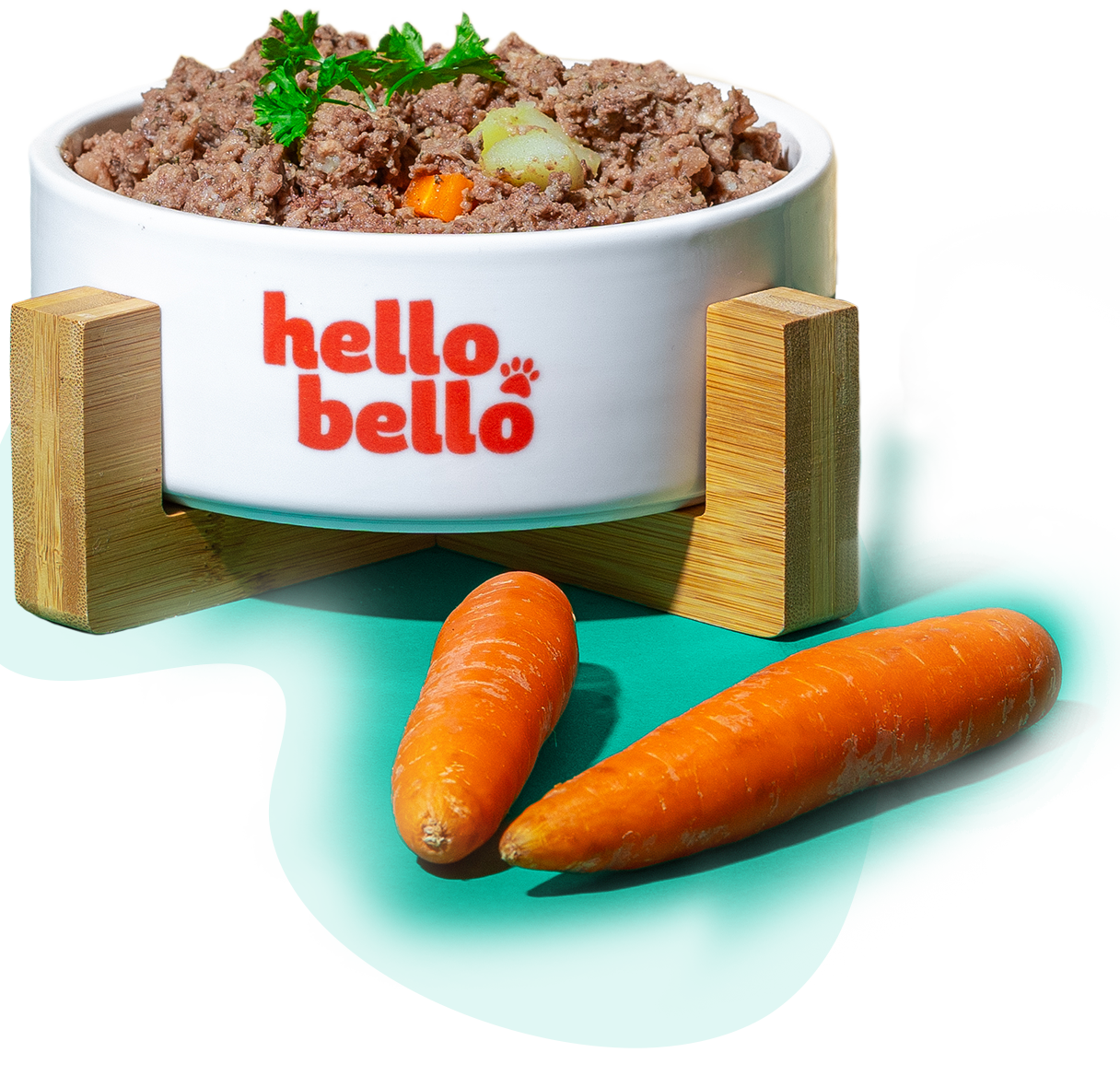
HelloBello's freshly cooked meals are freshly cooked, gently steamed at 90 °C and individually tailored to your dog. You know exactly what ends up in the bowl, and you can adapt the menu to your dog's age, weight, activity and needs.
This does not replace a veterinary diagnosis. But a transparent, high-quality diet can help you make your dog's everyday life more conscious and avoid unnecessary ingredients.

Food transition for sensitive dogs: Please go slowly
If your dog reacts sensitively, you should not change the food abruptly. The gut needs time to get used to new ingredients.
A gradual transition over several days is usually better tolerated. Especially with dogs with diarrhea, bloating or itching, you should not change new meals, snacks and chew items at the same time. Otherwise it will be difficult to recognize what is good for your dog and what is not.

Preventing allergies in dogs: What you can do in everyday life
Not every allergy can be prevented. Genes, environment and immune system play a role. Nevertheless, you can do a lot in everyday life to support your dog's skin, gut and well-being.
- Transition food slowly
- pay attention to clear ingredients in snacks and chew items
- rinse paws after walks if your dog reacts to pollen
- wash resting places regularly
- take flea protection seriously
- regularly check skin and ears
- keep an eye on weight
- have recurring complaints checked by a veterinarian early
When you should definitely go to the veterinarian
Please go to the veterinarian if your dog:
- scratches itself until it bleeds
- has open or weeping skin areas
- licks paws or belly heavily
- keeps getting ear infections
- frequently shows diarrhea or vomiting
- loses weight significantly
- appears apathetic
- shows pain
- suddenly swells or gets breathing problems
In case of facial swelling, shortness of breath, circulatory problems or severe vomiting after a sting, medication or food contact, you should seek immediate veterinary help. This can be an emergency.

Conclusion: Take allergies in dogs seriously, but stay calm
If your dog scratches itself, licks its paws or repeatedly shows skin and digestive problems, that is no reason to panic. But it is a signal.
Allergies in dogs can have many causes. That is why it is important to look closely, not guess triggers prematurely and have recurring complaints checked by a veterinarian.
A high-quality, transparent diet can be an important part of everyday life. Especially when you want to know what really ends up in the bowl. HelloBello meals are freshly cooked, individually tailored to your dog and prepared without unnecessary additives.

Anita Lorber
Ready to give your allergic dog a healthier and longer life?
Order freshly cooked dog food now and save!
Order nowReady to give your dog a healthier and longer life?
Order gluten-free dog food now and 30 % save!
Order now