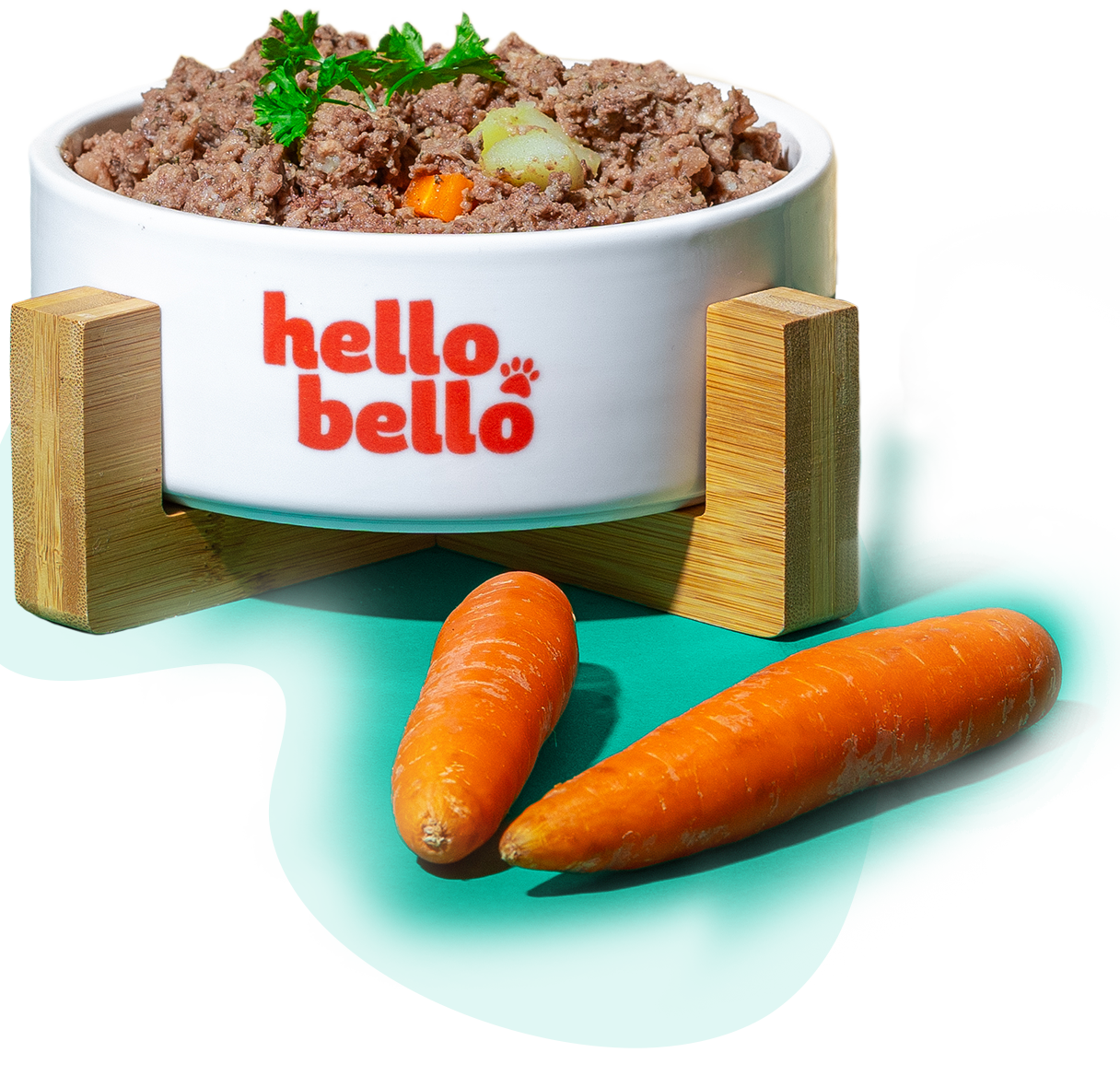
Does your dog have dry skin, flakes, itching, or dull fur? You're not alone – many dog owners know the problem, especially in winter or after a change in food. In this guide, we show you the most common causes, which home remedies really help, when you should go to the vet and how the right diet with omega-3 fatty acids strengthens your dog's skin barrier sustainably from within.
Jump to section
Recognizing symptoms: Does my dog really have dry skin?
Before you take action, it's worth taking a close look at your dog's skin and coat. Typical signs of dry dog skin are:
- Visible white flakes in the fur or on the resting place
- Dull, lifeless fur
- Frequent scratching, licking, or biting in certain areas
- Reddened or cracked skin areas
- Increased hair loss without an obvious reason
- Unpleasant odor despite regular care
If several of these symptoms occur at the same time or for a long time, you should investigate the cause. Often the cause lies in the diet – our food guide helps you find the right diet for your dog.

The most common causes of dry skin in dogs
Flakes and dry skin are rarely a problem in themselves – they are a symptom. The causes can be very different and range from congenital factors to deficiencies in the diet.
Congenital & breed-related causes
In some breeds, increased sebum production and thus increased flaking is genetically predisposed. Particularly affected are:
- Cocker Spaniel
- Doberman
- Yorkshire Terrier
- West Highland White Terrier
- German Shepherd
If this predisposition has been ruled out by a veterinarian, the symptoms can be well managed with a combination of medicated shampoos, targeted care and a high-quality diet.
External influences
- Parasites such as scabies or fur mites often cause flakes combined with severe itching. You can find out more about this in our article on Grass mites in dogs.
- Dry heating air in winter removes moisture from the skin – similar to us humans.
- UV light in summer can lead to dry, irritated skin, especially in short-haired or light-colored dogs.
- Improper care: bathing too often or unsuitable shampoos destroy the natural skin barrier.
Internal causes
- Malnutrition, especially with very cheap dry foods with a low fatty acid content
- Feed allergies or intolerances – find out more in the guide on Feed allergies in dogs
- Metabolic diseases such as hypothyroidism
- Special skin diseases such as "Zinc-Responsive Dermatosis"
- Stress and hormonal changes
When should you go to the vet with your dog?
Not every flake is an emergency – but there are clear warning signs where you should not try to treat it yourself, but get a veterinary diagnosis instead:
‼ Go to the vet immediately if:
- Severe, persistent itching
- Bloody or open skin areas
- Sudden hair loss in larger areas
- Strong odor or purulent areas
- Lethargy, loss of appetite or weight changes
- Suspected parasites (visible creatures or scabs)
Only your veterinarian can reliably determine with a skin sample or blood test whether, for example, mites, an allergy, or a hormonal disorder is behind it.
Essential fatty acids: The basis for healthy dog skin
If medical causes have been ruled out, the most effective therapy usually starts in the bowl. As described in our article on the best home remedies from the dog pharmacy, omega-3 fatty acids (EPA and DHA) play a central role for healthy skin and shiny fur.
They work on three levels:
- Building the skin barrier – they ensure that the skin retains moisture better
- Anti-inflammatory – they soothe itching and irritated skin areas
- Gloss & suppleness of the fur – dogs look visibly better cared for
The dog's body cannot produce these fatty acids itself – they must be supplied through the diet.
Bello's tip:
High-quality fresh food provides the necessary fatty acids in the natural, highly bioavailable form – without you having to dose extra.👉 Start the HelloBello food guide – healthy dog food individually tailored to your dog
Which oil really helps? The big comparison
There are many recommendations circulating on the internet – not all are useful. Here is an honest overview:
| Oil | Effect on dry skin | Recommendation |
|---|---|---|
| Salmon oil | Very high proportion of EPA & DHA, ideal bioavailability | ⭐⭐⭐⭐⭐ Top recommendation |
| Hemp oil | Perfect omega-3/6 ratio (1:3), rich in gamma-linolenic acid, plant-based, free of contaminants | ⭐⭐⭐⭐⭐ Top recommendation (plant-based) |
| Flaxseed oil | Plant-based omega-3 (ALA), must be converted by the body | ⭐⭐⭐ Good as a supplement |
| Olive oil | Mild medium, effective mainly from within, not as rich in omega-3 | ⭐⭐ Rather supportive |
| Coconut oil | Antibacterial, applicable externally – controversial internally | ⭐⭐ Only use locally |
Dosage recommendation for salmon oil (as a guideline)
| Dog weight | Daily amount of salmon oil |
|---|---|
| up to 5 kg | ½ teaspoon |
| 5–15 kg | 1 teaspoon |
| 15–30 kg | 1–2 teaspoons |
| 30 kg+ | 1 tablespoon |
⚠️ Important: Introduce slowly – start with half the amount to avoid overwhelming the gastrointestinal tract. If you notice digestive problems, our guide on Gastrointestinal problems in dogs will help further.
Home remedies & external care
In addition to diet, you can also support your dog's skin from the outside:
- Regular brushing (2–3 times a week) distributes the skin's natural oils and removes loose flakes.
- Use a mild, dog-specific shampoo – never use human shampoo! Bathe your dog at most every 4–6 weeks.
- Increase humidity in winter (use a humidifier or place damp towels on the heater).
- Spot-ons with essential fatty acids can help with acutely dry patches.
- Provide plenty of water – the skin needs hydration from within too.
Quick help from within: Our Skin & Coat Drops
If you want to support your dog's skin health in a targeted and functional way, our HelloBello Skin & Coat Drops are the perfect addition to their daily diet – a tasty snack that also supports their skin and coat.
What's inside?
- Lamb protein – a high-quality, easily digestible protein source, also ideal for dogs with sensitive stomachs
- Algae oil – a plant-based source of omega-3 fatty acids (EPA & DHA), sustainably sourced and free from contaminants
- Brewer's yeast – a natural source of B vitamins, biotin, and zinc, all essential for skin and coat health
- Yeast hydrolysate – supports the absorption of important nutrients
- Sweet potato & potato – a gentle, grain-free carbohydrate base
- Vegetable glycerin – gives the snack its soft texture
→ 100% natural ingredients, grain-free, no artificial additives, no sugar.
Why our drops?
- Tasty snack format – even picky eaters love them
- Algae oil instead of fish oil: sustainable, free from contaminants, and vegetarian – also perfectly suited for dogs with fish intolerances
- Brewer's yeast provides biotin and zinc in their natural form – the classics for a healthy coat
- Visible results usually after 3–4 weeks of daily use
- Ideal as an occasional reward or as a topping for their food

Diet as a long-term solution
The truth is: Skincare masks symptoms, while diet addresses the causes. If your dog lacks essential fatty acids, high-quality proteins, or certain vitamins, you will see it in their skin and coat sooner or later.
What to look for in their food:
- Fresh ingredients instead of flour and fillers
- Clearly declared meat content (e.g., "70% chicken," not "animal derivatives")
- Salmon oil or other high-quality oils as a fixed ingredient
- No artificial preservatives or added sugar
- Ideally tailored to your dog's breed, age, weight, and activity level
HelloBello: The optimal choice for skin and coat health
We developed our fresh food according to these exact principles:
✅ Gently cooked – preserves valuable nutrients and vitamins
✅ High proportion of fresh muscle meat of food-grade quality
✅ Hemp oil as a fixed ingredient – omega-3 for skin & coat
✅ Grain-free, without sugar and artificial additives
✅ Developed by veterinarians and tailored to your dog
✅ Delivered in exact portions – flexibly adjustable, can be paused at any time

Frequently Asked Questions About Dry Skin in Dogs
Which oil helps best with dry skin in dogs?
Salmon oil is considered the most effective option because it contains particularly high levels of omega-3 in the form of EPA and DHA – the exact fatty acids that the dog's body can utilize directly. Hemp and linseed oils are useful plant-based supplements.
What should you do if your dog is flaking and itching?
First, determine the cause: Is it dry heating air, a change in food, or something more serious? In cases of severe itching, bleeding patches, or hair loss, you should always consult your veterinarian to rule out parasites or allergies.
How long does it take for salmon oil to work in my dog?
Improvements are usually visible after 3–4 weeks. For a noticeable change in skin and coat, you should feed salmon oil continuously for at least 8–12 weeks.
Can dry food cause dry skin?
Yes, especially low-quality dry food with a high proportion of grain or fillers and few high-quality fats can trigger a deficiency in essential fatty acids – and this often shows up first in the skin and coat.
Does coconut oil help with dry dog skin?
Applied topically to individual dry patches, coconut oil can provide short-term care. However, as a regular addition to their food, it is not ideal because it contains almost no omega-3. Salmon oil is a much better choice here.
Which vitamin deficiency causes flaking in dogs?
Deficiencies in zinc, biotin, vitamin A, vitamin E or essential fatty acids are often to blame. A balanced, high-quality diet usually covers these requirements completely.
Conclusion: Healthy skin starts in the bowl
Dry skin and flaking in dogs are usually not inevitable, but rather a solvable problem. Skincare from the outside helps in the short term – but the real turning point comes from a high-quality diet tailored to your dog with the right fatty acids.

Wolfgang Maurer
Jump to section
Ready to give your dog a healthier and longer life?
Order gluten-free dog food now and 30 % save!
Order now